Thomas Jane Medical Clinical Team · Topic: Hemostasis · Pediatric ENT · Opioid-sparing protocols
Managing post-tonsillectomy bleeding and pain remains one of the most clinically significant challenges in outpatient ENT surgery. This review examines

By Thomas Jane Medical
Specialty surgical supply chain resilience has become increasingly important as hospitals and surgery centers work to prevent product shortages while maintaining uninterrupted patient care.
Healthcare organizations continue to face unprecedented pressure on their supply chains. From global manufacturing disruptions and transportation delays to unexpected spikes in procedural volumes, maintaining reliable access to specialty surgical products has become a strategic priority for hospitals, ambulatory surgery centers (ASCs), and physician practices.
While major distributors play an essential role in healthcare logistics, specialty surgical products are often the items most vulnerable to shortages. ENT consumables, hemostatic products, surgical sponges, and other procedure-specific supplies may not always receive the same prioritization as high-volume commodity items.
For surgical teams, the consequences can be significant.
A delayed shipment or unavailable specialty product can disrupt operating room schedules, create clinical inefficiencies, and increase costs across the organization.
Healthcare leaders are increasingly recognizing that supply chain resilience is no longer simply a procurement issue — it is a patient care issue.
Healthcare procurement teams today must balance several competing priorities:
For organizations performing high volumes of ENT, surgical, and specialty procedures, these challenges become even more complex.
Unlike commodity medical supplies, specialty surgical products often serve highly specific procedural applications.
Examples include:
When these products become unavailable, surgical teams may have limited alternatives.
Building a resilient supply strategy requires healthcare organizations to identify critical specialty products and establish dependable sourcing relationships before shortages occur.
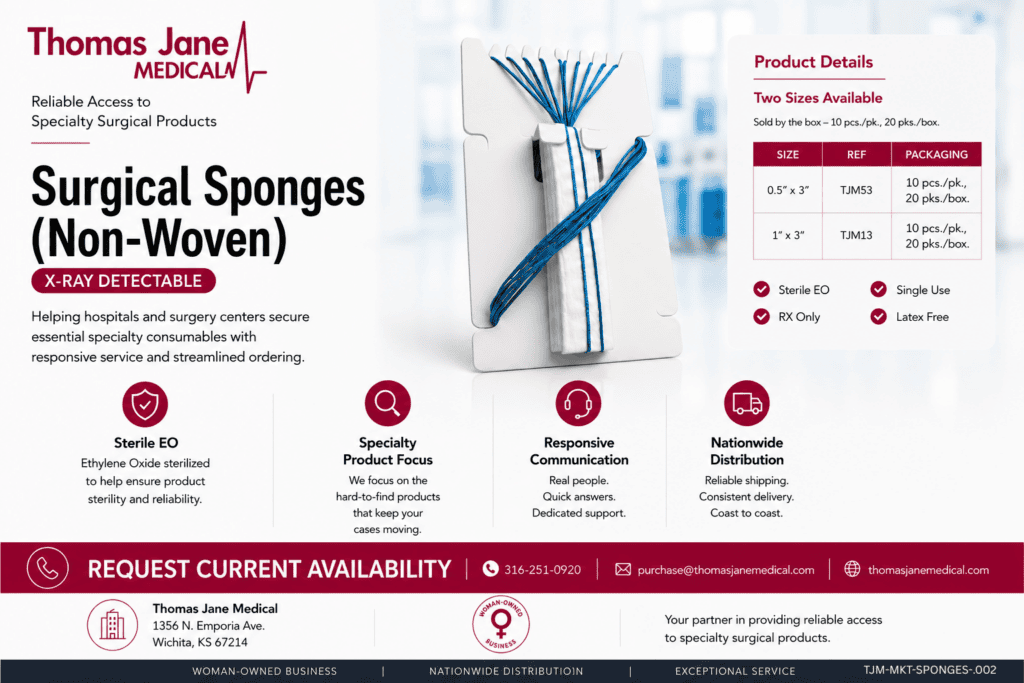
Many healthcare systems depend heavily on national distribution channels.
While these organizations provide substantial purchasing power and logistical capabilities, specialty products can occasionally receive lower prioritization during periods of disruption.
Healthcare leaders increasingly recognize the importance of maintaining relationships with independent specialty distributors capable of providing:
A diversified sourcing strategy strengthens supply assurance and reduces operational risk.
Healthcare organizations should maintain a list of procedure-critical supplies, including:
Understanding which products cannot easily be replaced allows organizations to prioritize inventory planning.
Supplier relationships should extend beyond transactional purchasing.
Strong partnerships create opportunities for:
Maintaining appropriate safety stock for specialty products helps organizations navigate unexpected demand spikes without disrupting patient care.
Inventory decisions should consider:
Healthcare organizations should work with suppliers committed to:
Product reliability remains essential for protecting both patients and clinical teams.
Healthcare systems and Group Purchasing Organizations (GPOs) increasingly recognize the value of diverse supplier participation.
Working with qualified woman-owned and diverse suppliers helps organizations:
Independent specialty distributors frequently provide flexibility and responsiveness that complement larger supply agreements.

Thomas Jane Medical is a woman-owned specialty surgical products distributor serving hospitals, ambulatory surgery centers, and physician practices nationwide.
Our focus is simple:
Responsive service. Specialty expertise. Dependable access.
We partner with healthcare providers to support:
By combining clinical understanding with responsive customer support, we help healthcare organizations maintain continuity of care when access to specialty products matters most.
Supply chain disruptions will continue to challenge healthcare organizations.
The question is not whether disruptions will occur, but how prepared organizations will be when they do.
Investing in specialty supply chain resilience today helps ensure surgical teams have reliable access to the products they need tomorrow.
Contact Thomas Jane Medical to learn how our team can support your hospital, surgery center, or physician practice with dependable access to specialty surgical products and responsive service.